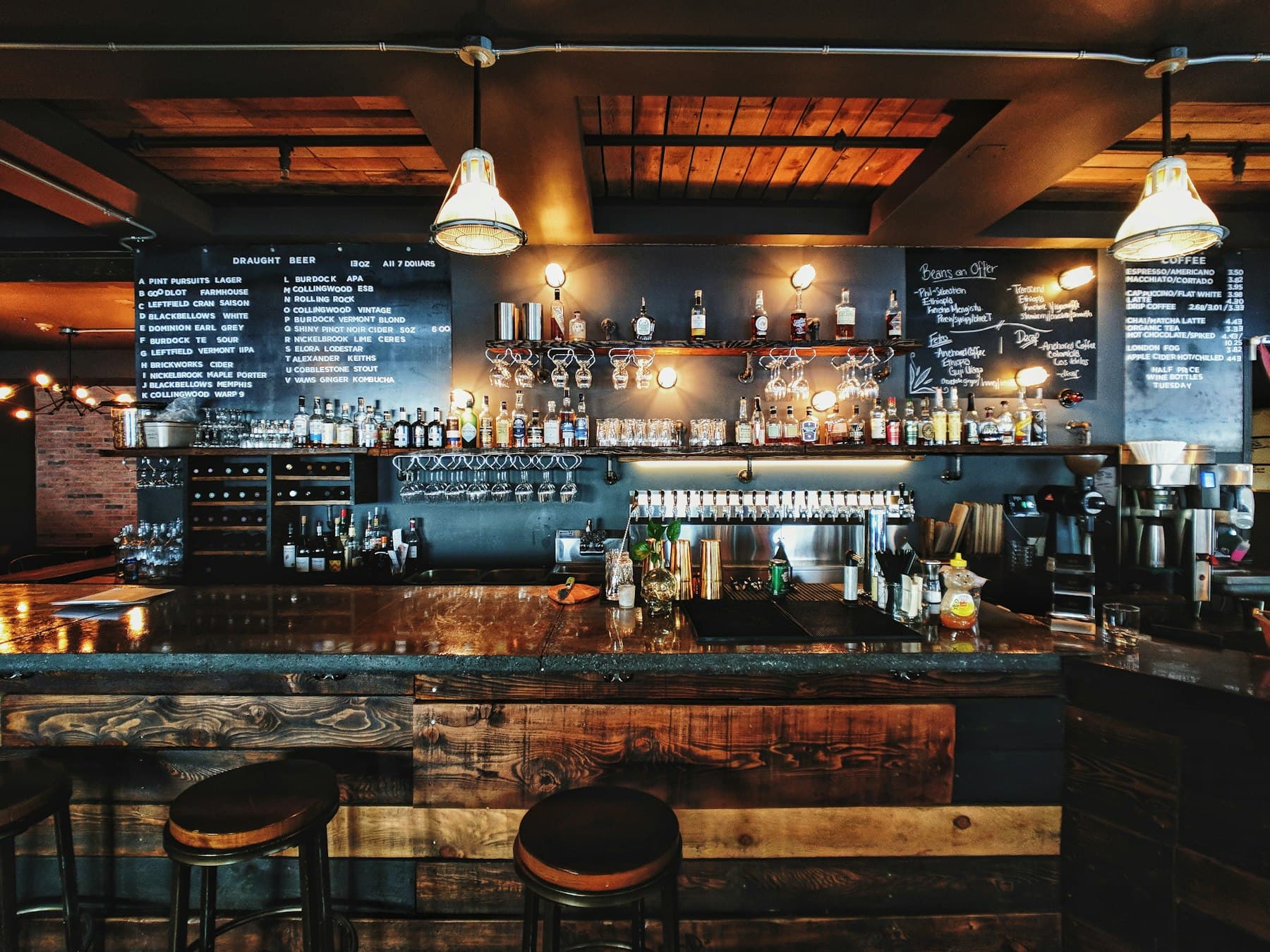
If the question is quiet wine bars versus loud clubs, you already know the answer: they are different nights. Choose a wine bar when the job is a pour and a conversation. Choose a nightclub when the job is a dancefloor and a door. This directory will not score one as better, invent a quiet table, or publish a star rating.
A wine bar belongs with cocktail bars and pubs on the sitting-down side. Adelaide’s archive filed Apothecary 1878 as a wine bar. Melbourne CBD and north hold a lot of this type. Use the city hub for geography, this page for the choice. Confirm the room still pours wine and not a guest-list night.
What a wine bar is on this map
A wine bar is a licensed room organised around bottles, glasses, and a list you can talk over. The furniture is for sitting. The sound is meant to allow a sentence to finish. Food, if it exists, is usually a plate that supports the list rather than a pub bistro — but kitchens change, and we will not invent a cheese board that may have left the menu.
Australian wine bars grew up next to restaurant culture as much as next to nightlife. Some are shopfronts that stay open after the last kitchen seating. Some are cellar doors in a city disguise. Some share a licence with a restaurant and only feel like a bar after 9pm. The type still helps a person who typed “wine bars vs loud clubs” because the alternative they are trying to avoid is a door, a cover, and a floor.
Overlap with cocktail bars is common. A wine room may shake one house serve. A cocktail room may have a short glass list. File by the centre of gravity. Overlap with lounge bars is the couches-and-volume question. Overlap with pubs is rare on purpose: a front bar with a house white is still a pub.
How to choose — night first, precinct second
Pick the night before you pick a famous street. If anyone in the group wants to dance, you are planning two events. Do the wine bar first and end there, or skip it and go to the precinct that holds nightclubs. Splitting a small group across Fortitude Valley and a quiet CBD list is how the night dies in a rideshare.
If everyone wants to talk, stay on this side of the map. A walking precinct matters more than a trophy bottle. Melbourne laneways and north-side streets, Sydney CBD and The Rocks, Adelaide East, Hobart Salamanca, Perth CBD before Northbridge — those geographies support a sitting night. Kings Cross, the Valley, Northbridge, and Surfers Paradise can still hide a quiet room; they are not designed around one.
Bookings, if the room takes them, belong to the venue. Walk-in wine bars fill on Friday. This site is not a reservation desk. We will not hold a barrel table.
ID, hours, and what “quiet” does not mean
Wine bars are 18+. Responsible service of alcohol applies. Photo ID is commonly asked if you look under 25. A quiet room can still refuse service. “Quiet” is a type signal, not a guarantee that the table next to you will whisper. A Friday wine bar in a capital CBD can be loud. If you need actual silence, that is a different plan than nightlife.
There is no national closing time. Wine rooms often end earlier than clubs; that is a pattern, not a law we can print for every licence. The 2014 NSW lockout package — wound back from 2020 — is a club-and-late-hotel history more than a wine-bar history. Individual venues still set last drinks. Confirm the night you go. Details sit on the FAQ.
Dress codes are usually lighter than a Saturday club door and still not something we invent. Shoes are still a good idea.
City notes, not a medal table
Melbourne is the city people name for wine-bar density because the restaurant and laneway culture already supports sitting rooms. The CBD holds a lot of them; Melbourne north and Fitzroy hold neighbourhood pours between pubs. Strangelove’s is an archive wine-bar card. That is a URL and a type, not a ranking. St Kilda is more bandroom than bottle list.
Sydney wine nights work where you can sit: CBD restaurant bars, The Rocks and Circular Quay edges, pockets of the Inner West that this seed set does not fully map. Harbour precincts are visitor-heavy; that does not make them clubs. After the bottle, Oxford Street and Darling Harbour are different jobs. Do not treat a Rocks courtyard hotel as a wine bar just because you can order a glass.
Adelaide filed Apothecary 1878 as the type specimen. The compact grid means a wine pour in the East End and a late room on the Hindley side of the CBD can share a walk and still be opposite nights. Distill is the cocktail sibling. Use both cards as character.
Brisbane wine-bar plans belong in the CBD or West End more naturally than in the Valley if conversation is the point. The Valley is a declared entertainment precinct. You can drink wine there. You should not expect club streets to behave like a cellar.
Perth sitting pours are easier in the CBD and in Fremantle’s restaurant-and-pub fabric than in Northbridge after 11. Fremantle is still more port town than wine-bar capital; read the city hub and pick a room, not a trophy.
Hobart visitors will find glasses of Tasmanian wine in Salamanca and waterfront rooms that are hotels and restaurants as often as dedicated wine bars. North Hobart is live pubs. That is enough of a map. We will not invent a Hobart club strip to contrast with it.
Canberra, Darwin, Gold Coast, Newcastle, and Cairns all pour wine. Dedicated wine-bar density is thinner in the archive than in Melbourne. Start with the city hub. On the Gold Coast, do not confuse a restaurant list in a hotel with the Surfers late strip.
By the glass, without a lecture
You do not need to know regions to use a wine bar. Say whether you want white, red, sparkling, or something lower alcohol. Say if you prefer citrus, richer, lighter, or more tannin. Ask what is open by the glass that is not the house default. That is courtesy, the same as naming a spirit in a cocktail bar.
We will not publish a vintage list or claim a room is “the best for pinot.” Australian wine regions exist; this is a nightlife directory, not a cellar guide. If a profile mentions a list, treat it as a reason to check the venue’s own channels.
Groups should decide now whether they are sharing bottles or drinking glasses. That decision changes the table you need and the time you will stay. It does not change the type: you are still not in a club.
What this page refuses to do
It will not rank wine bars against clubs. It will not invent live hours, cover charges, or a reserved quiet corner. It will not tell you a room has become a nightclub this weekend. It will not sell you a booking.
If the night changes its mind and wants a door, open nightclubs and the matching city precinct. If it wants mixed drinks, open cocktail bars. If it wants beer and a meal, open pubs. If it wants couches and a late sit, open lounge bars. Venue URLs stay at /{city}/all/{venue}/. Corrections go to contact. 18+. Drink responsibly.